

 Are
you ready to help them? Let’s become a volunteers...
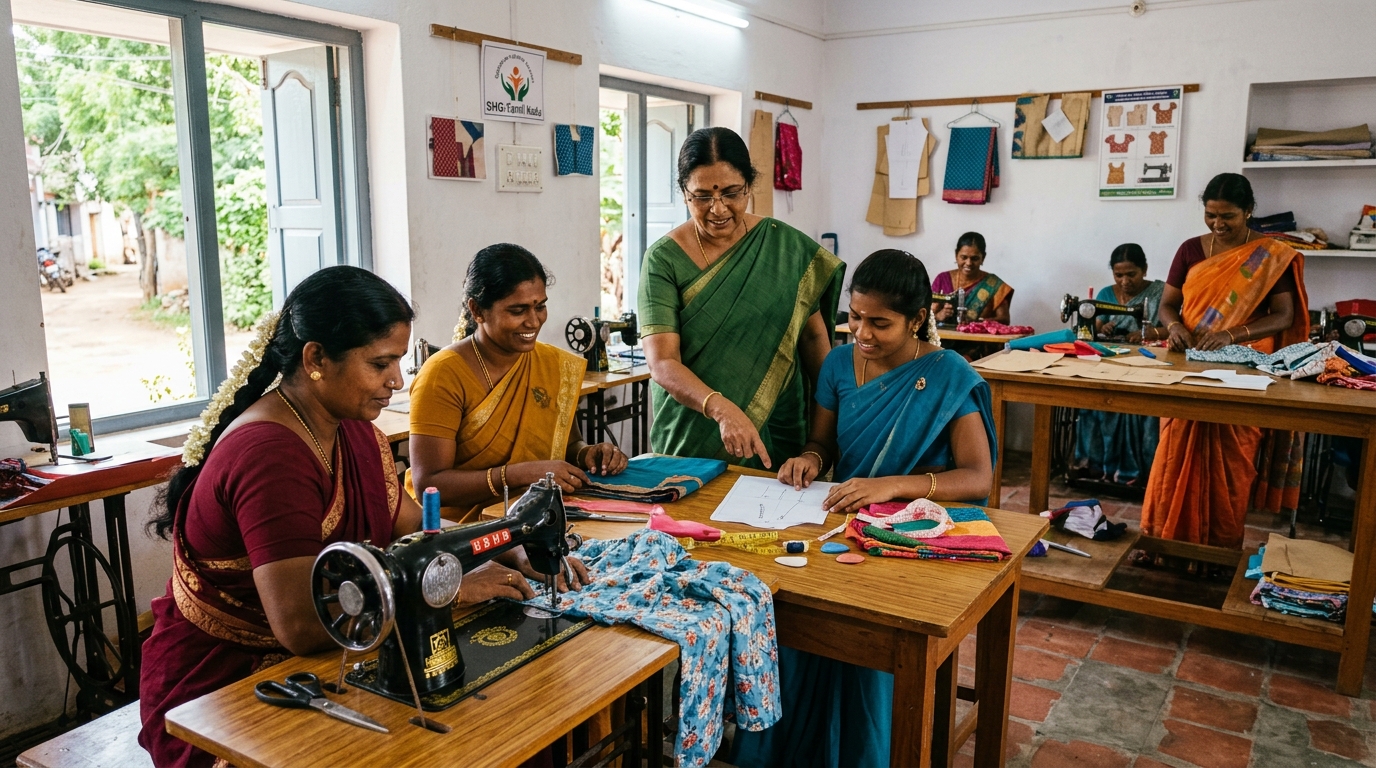
Empowering Rural Women: How Skill Training and SHGs Drive Financial Independence in Thoothukudi
"When you educate and economically empower a woman, you do not simply uplift an individual—you transform a household, enrich a village, and inspire future generations."
Introduction: The Catalyst of Rural Economic Transformation
In the agrarian and coastal landscape of Thoothukudi, rural women have long performed indispensable labor—from harvesting crops and tending livestock to managing household responsibilities. Yet, historically, a large majority of this labor has remained uncompensated, leaving women financially reliant on fluctuating seasonal wages earned by male family members.
Over the last decade, a quiet yet powerful socioeconomic revolution has taken root across the villages of Thoothukudi. Driven by Women Self-Help Groups (SHGs) and dedicated non-governmental organizations like Sundaram Ammal Foundation, rural women are breaking through socioeconomic boundaries by acquiring vocational competencies, launching micro-enterprises, and securing lasting financial independence.
1. Moving Beyond Savings: The Power of Marketable Vocational Skills
While microcredit and community savings pools provide a vital financial cushion, credit alone cannot generate sustainable wealth without productive, income-generating capabilities. By pairing SHG solidarity with hands-on vocational skill programs, NGOs turn communal savings into thriving grassroots enterprises:
- Professional Tailoring & Garment Making: Mastering sewing techniques, blouse stitching, school uniform fabrication, and embroidery enables women to fulfill local tailoring demands and secure bulk institutional orders.
- Artisanal Crafts & Eco-Products: Training in palmyra craft making, eco-friendly cloth bag production, and organic food processing capitalizes on local raw materials in Thoothukudi while promoting environmental sustainability.
- Financial Literacy & Digital Banking: Beyond manual craftwork, women learn digital payment solutions (UPI), bank ledger maintenance, loan management, and transparent group accounting.
2. The Collective Strength of Self-Help Groups
One of the most remarkable outcomes of the SHG model is the psychological solidarity it nurtures. For many homemakers who previously lived in social isolation, attending regular weekly group meetings fosters camaraderie, shared ambition, and mutual accountability. In these collaborative spaces, women negotiate fair prices for raw materials, share workloads during peak festive seasons, and collectively solve family and community challenges.
3. The Ripple Effect: Health, Nutrition, and Education
Global economic research consistently confirms that when women earn independent incomes, they reinvest up to 90% of their earnings directly into their households. In rural Thoothukudi, the positive reverberations of women's financial independence are visible everywhere:
- Higher School Enrollment for Girls: Mothers with independent incomes prioritize keeping their daughters in secondary school and financing college education.
- Improved Family Nutrition & Healthcare: Regular earnings translate into balanced daily meals, timely medical checkups, and early treatments for elderly relatives.
- Enhanced Voice in Governance: Economically self-reliant women actively participate in Grama Sabha assemblies, advocating for village clean water, road lighting, and community safety.
Support Women's Vocational Training
Your contribution helps provide sewing machines, tailoring training kits, and enterprise starter tools to rural women in Thoothukudi.
Support Women Empowerment4. Sundaram Ammal Foundation's Grassroots Commitment
At Sundaram Ammal Foundation, fostering women's dignity and self-sufficiency is central to our founding mission. Our vocational workshops provide structured, hands-on training led by experienced master trainers right within village neighborhoods. By facilitating market linkages and providing free sewing machines to qualified graduates, we ensure that every trainee has a direct path from classroom learning to consistent livelihood generation.
Conclusion
Empowering rural women through vocational skills and self-help groups is not merely a social welfare effort—it is the bedrock of enduring community prosperity. As more women across Thoothukudi step confidently into entrepreneurship, their courage and independence illuminate the path forward for an equitable, thriving rural Tamil Nadu.
Leave a Reply
Your email address will not be published. Required fields are marked