
Blog Details

Rural Livelihood Programs That Actually Work — Lessons From the Ground

Rural Livelihood Programs That Actually Work — Lessons From the Ground

“True empowerment isn't about giving handouts; it's about building local ecosystems where rural communities can generate sustainable income on their own terms.”

Rural development has been a cornerstone of India's social welfare policy for generations. Yet, many top-down government programs struggle to translate high-level budgets into lasting local success. The challenge is complex: rural areas face seasonal agricultural cycles, limited connectivity to modern markets, low financial literacy, and lack of training tailored to local opportunities. It is at this ground level that community-focused non-profit organizations (NGOs) are demonstrating what actually works. By focusing on localized, adaptable, and community-led initiatives, we can create sustainable rural livelihoods that lift households out of poverty permanently.

Sundaram Ammal Foundation (SAF) has spent years designing and executing livelihood programs across rural Tamil Nadu. In doing so, we have gathered valuable, real-world lessons about what makes these initiatives succeed, what causes them to fail, and how communities can build economic resilience from the ground up.

Core Pillars of Rural Livelihood Programs in India

An effective rural livelihood strategy does not rely on a single solution. Livelihood options must be diverse and resilient. Across the ground in Tamil Nadu, our successful interventions generally center on three main areas:

1. Sustainable Agriculture and Farmer Producer Organizations (FPOs)

Agriculture remains the primary livelihood for most rural households. However, smallholder farmers often face high input costs, water scarcity, and exploitation by middlemen. Livelihood programs that actually work focus on reducing costs and increasing bargaining power:

  • Organic and Low-Cost Farming Practices: Teaching techniques like natural composting, integrated pest management, and water harvesting to lower input costs.
  • Farmer Producer Cooperatives: Grouping small farmers together into FPOs to buy seeds, tools, and fertilizers in bulk, and to sell their produce directly to retail markets, cutting out middlemen.
  • Value Addition and Processing: Helping farmers process raw goods locally—such as producing organic oil, milled grains, or sun-dried spices—to earn significantly higher margins.

2. Self-Help Groups (SHGs) and Women's Micro-Enterprises

Women's economic participation is the single most powerful driver of household poverty reduction. Effective rural programs leverage the strength of Self-Help Groups to build local micro-enterprises:

  • Collective Micro-Credit: Empowering SHGs to pool savings and access low-interest bank loans for starting small businesses like tailoring units, dairy farms, and food processing centers.
  • Market Integration: Connecting women's enterprises to regional exhibitions, online platforms, and corporate supply chains, ensuring their products have consistent buyers.
  • Confidence and Leadership Training: Building confidence in group dynamics, negotiation, and household decision-making, which is as critical as financial support.

3. Skill Development and Digital Inclusion for Rural Youth

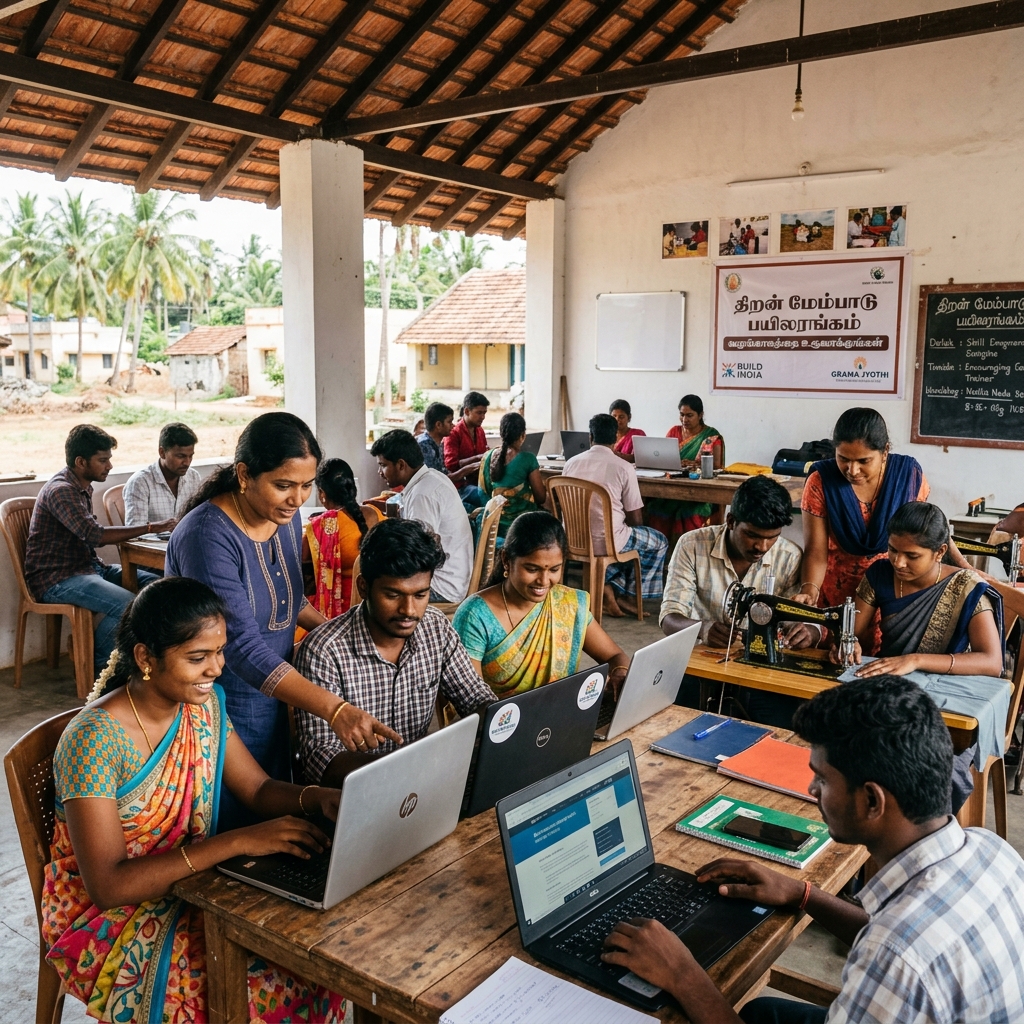
Youth in rural Tamil Nadu are increasingly educated but face high rates of unemployment. Livelihood programs must bridge the gap between traditional rural life and the modern digital economy:

  • Vocational Training with Placement Links: Delivering hands-on training in paramedical services, mobile repair, solar installation, and modern manufacturing, tied directly to employment opportunities.
  • Digital Literacy & Freelancing: Training youth in basic computing, online banking, social media marketing, and data entry, enabling remote work and gig economy participation.
  • Entrepreneurship Support: Assisting youth who want to launch digital service centers, e-commerce shops, or logistics nodes in their home villages.

Key Lessons from the Ground: What Decides Success?

Through our work at Sundaram Ammal Foundation, we have identified several critical principles that separate successful rural livelihood programs from well-intentioned failures:

Lesson 1: Grounding in Local Market Demand

A common mistake is training rural participants in skills for which there is no local market. For example, training dozens of women in tailoring in a small village where everyone already makes their own clothes does not create new income. Programs must begin with a thorough market assessment: What products or services do local and regional buyers actually want, and where are the gaps in the supply chain?

Lesson 2: Integrating Financial and Digital Literacy

Handing over tools or equipment to an individual is not enough. If a rural entrepreneur does not understand cost calculations, pricing strategies, cash flow management, or how to use digital wallets for payments, their business will struggle to survive. Livelihood training must always bundle vocational skills with fundamental business literacy.

Lesson 3: Building Resilient Collective Models

Individual micro-entrepreneurs in villages face huge disadvantages in buying raw materials and selling finished products. By organizing them into Self-Help Groups or cooperatives, they gain collective bargaining power. They can buy in bulk at lower prices and negotiate fairer prices with bulk buyers, ensuring their long-term viability.

Lesson 4: Sustained Mentorship over Short-Term Workshops

A typical three-day workshop rarely leads to a successful business. True economic empowerment requires ongoing support. Livelihood programs must build in 3 to 6 months of active mentorship post-training—helping participants solve operational problems, register their businesses, navigate licensing, and manage their first clients.

All livelihood and skill programs run by Sundaram Ammal Foundation are completely free for participants. We are committed to removing financial barriers to sustainable employment.

Frequently Asked Questions — Rural Livelihood Programs

NGOs conduct local resource mapping and market demand surveys before launching a program. We analyze what products are in high demand in nearby towns, what agricultural raw materials are abundant, and the existing skills and mobility constraints of the community members.

Yes. All SAF vocational, agricultural, and digital livelihood training programs are completely free of charge. We believe financial limitations should never prevent an individual from acquiring employment skills.

We provide post-training support for 3 to 6 months. This includes linking Self-Help Groups to bank credit, connecting micro-enterprises with wholesale buyers and distributors, assisting in government licensing, and providing regular business mentorship.

You can support our work by donating funds to sponsor micro-enterprise kits, volunteering as a digital or business mentor, or partnering with us under corporate social responsibility (CSR) programs. Contact us at director@sundaramaf.org to get involved.

Support Rural Youth Empowerment in Tamil Nadu

Volunteer, Donate, or Partner with Sundaram Ammal Foundation
sundaramaf.org  |  director@sundaramaf.org  |  +91-98421-60709

Donate Now Become a Volunteer

Leave a Reply

Your email address will not be published. Required fields are marked