

 Are
you ready to help them? Let’s become a volunteers...
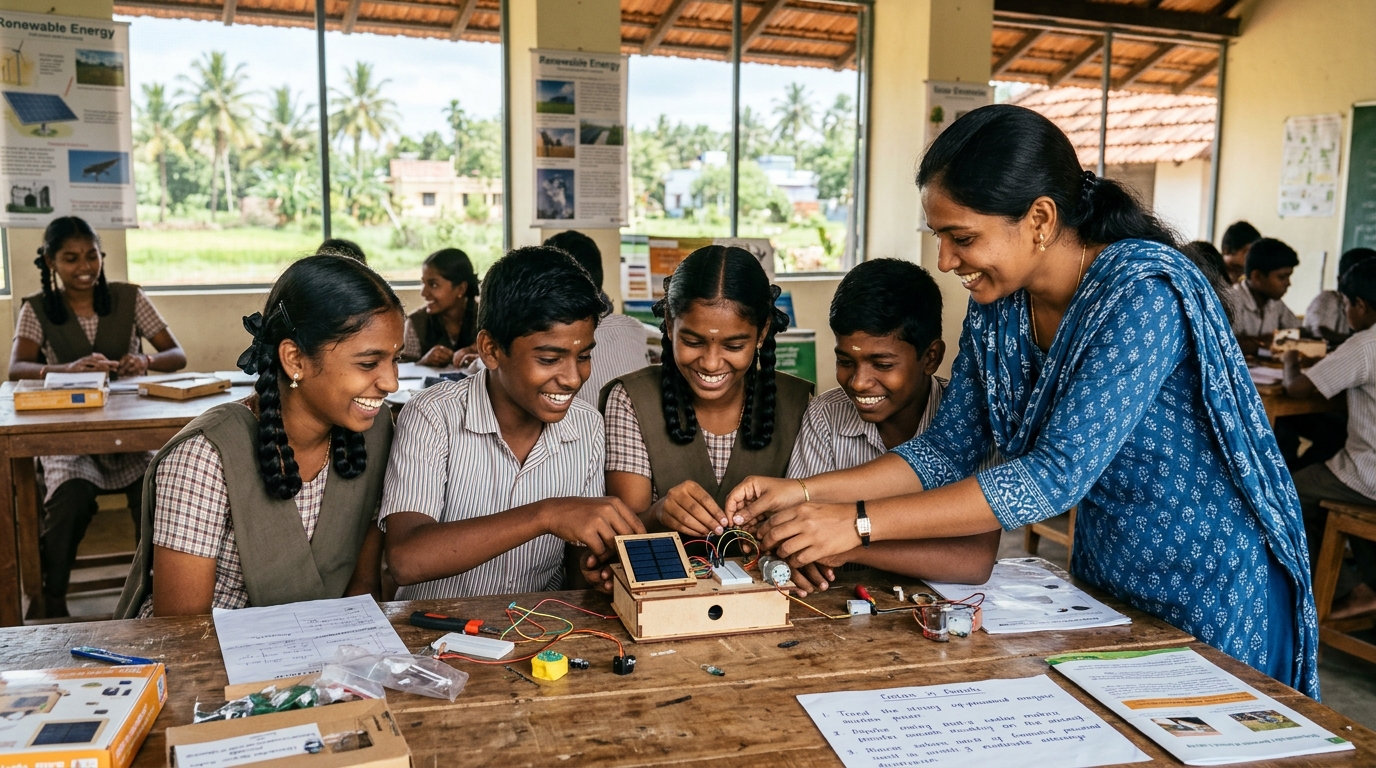
How NGO Help for Education Supports Youth Development Through Practical Learning
"True education does not merely train the memory to repeat formulas; it empowers young minds to experiment, create, and solve real-world problems."
Introduction: The Need for Hands-On Education
For decades, conventional schooling across many rural areas has leaned heavily on rote learning and textbook memorization. While mastering foundational concepts is important, students often leave school without ever understanding how theoretical formulas connect to everyday machinery, natural sciences, or workplace environments. This disconnect creates a noticeable capability gap when rural youth enter technical colleges or seek their first job opportunities.
NGO assistance in the education sector is reshaping this narrative. By introducing experiential and practical learning models into rural classrooms and community centers, non-profit organizations like Sundaram Ammal Foundation in Thoothukudi are transforming students from passive observers into inquisitive, capable problem solvers.
1. Moving Beyond Textbooks: Why Practical Learning Matters
When young learners interact with tangible tools—whether building a working circuit, programming a simple microprocessor, or testing soil pH levels—the abstract principles of science, technology, engineering, and mathematics (STEM) suddenly become vibrant and accessible. Practical learning offers several distinct advantages:
- Deeper Conceptual Retention: Concepts grasped through touch, observation, and assembly stay with students far longer than facts memorized solely for examinations.
- Encouraging Healthy Curiosity: Experiential projects invite questions such as "Why does this work?" and "What happens if I change this connection?", nurturing a scientific mindset.
- Removing the Fear of Failure: Hands-on experimentation teaches youth that trial and error is a natural step in innovation, building resilience and emotional fortitude.
2. Bridging the Urban-Rural Practical Exposure Divide
Urban private institutions frequently feature well-equipped robotics labs, science hobby clubs, and computer facilities. In contrast, rural government schools frequently lack dedicated laboratory equipment or consumables. Community-based learning centers established by NGOs bridge this resource disparity by providing shared toolkits, STEM project materials, and digital learning devices right within village clusters.
3. Cultivating Critical 21st-Century Workplace Skills
Modern employers increasingly prioritize analytical thinking, adaptability, and teamwork over grades alone. Group-based practical projects naturally cultivate these essential life capabilities:
- Collaborative Teamwork: Working in small peer groups to assemble models requires students to communicate clearly, divide responsibilities, and resolve disagreements productively.
- Analytical Troubleshooting: When an experimental circuit fails to light up or a code script produces an unexpected result, learners must methodically diagnose and correct the issue.
- Creative Problem-Solving: Practical challenges encourage students to design ingenious local solutions using accessible materials, fostering an entrepreneurial mindset.
Support Practical Learning Workshops
Help us bring STEM project kits, computer equipment, and hands-on science labs to underprivileged rural students.
Donate Today4. Mentorship that Inspires Self-Belief
Practical learning thrives when guided by compassionate mentors. Dedicated volunteers, engineering graduates, and educators at Sundaram Ammal Foundation act as supportive guides, encouraging village youth to explore new concepts without intimidation. Seeing first-generation learners light up with pride upon completing their first working project is proof of the profound psychological transformation practical education delivers.
Conclusion
Supporting youth development through practical learning is one of the most durable investments society can make. By turning education into an active, enjoyable, and relevant journey, NGOs unlock the boundless potential of rural youth. At Sundaram Ammal Foundation, we remain steadfast in our mission to ensure every young individual in Thoothukudi possesses the skills, confidence, and dignity required to thrive in a modern world.
Leave a Reply
Your email address will not be published. Required fields are marked