 Are
you ready to help them? Let's become a volunteer...
Are
you ready to help them? Let's become a volunteer...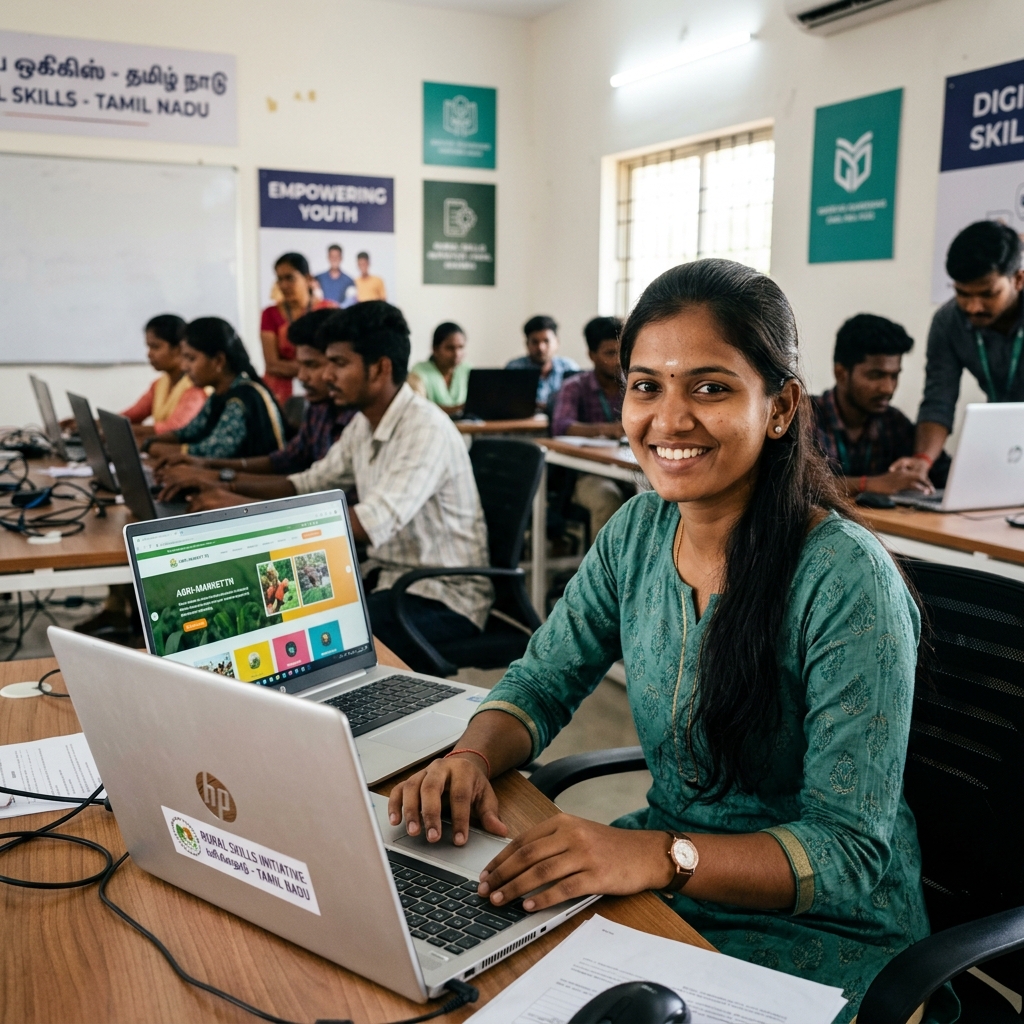
Success Stories from NGO Skill Development Programs — What Real Change Looks Like in Rural Tamil Nadu
“Impact reports show numbers. Success stories show what those numbers actually mean to the person whose life changed. Both matter — but only one tells the whole truth.”
NGO skill development programs are evaluated by many metrics: number of participants trained, certification rates, employment outcomes, income changes. These numbers are important. They tell funders whether a program is working and tell program managers where to improve. But they do not tell the full story of what skill development actually produces in a person\'s life — the change in confidence, the shift in family dynamics, the expansion of what a young person believes is possible for themselves.
This blog shares what success looks like in NGO skill development programs in rural Tamil Nadu — not as individual named stories, but as composite pictures of the kinds of transformation that Sundaram Ammal Foundation\'s programs consistently produce. These are real types of change happening in real communities, even when privacy considerations prevent us from sharing individual names.
What Success Looks Like in NGO Skill Development Programs — Beyond the Certificate
The First-Generation Graduate Who Found Her Own Path
In many villages across Thoothukudi district, the expected path for a young woman after completing 12th standard is marriage within a year or two. Higher education is for families who can afford it and who have the networks to navigate it. Skill development programs change this trajectory for young women who have ability and ambition but no clear path forward.
A young woman who completes a digital skills program and learns to manage social media for local businesses has not just learned a skill. She has changed her own understanding of what she is capable of. She has demonstrated to her family that her education produced something economically real. She has created a reason — and a means — to delay or reshape the social expectations placed on her. This is not a dramatic story. It is a quiet, real shift in the direction of a life, and it is happening in hundreds of households through NGO skill programs in Tamil Nadu.
The Young Man Who Did Not Have to Leave
Rural to urban migration is one of Tamil Nadu\'s most significant demographic realities. Young men leave their villages because local economic options are too limited. They work in factories, construction sites, and domestic service in cities — often in conditions and for wages that barely justify the separation from their families and communities.
A young man who completes a freelancing and digital work program through an NGO and begins earning through online platforms does not have to make this choice. He stays. His income comes from clients in Chennai or Bengaluru or Dubai, but he lives in his village, contributes to his household, and builds a livelihood without the social cost of migration. This outcome — keeping skilled young people in their communities — is one of the most consequential but least measured impacts of NGO skill development programs.
The Woman Whose SHG Loan Became a Business
Self-help group programs connected to livelihood skill training create a specific kind of compounding success. A woman who learns tailoring through an NGO skill program, joins an SHG supported by the same organisation, accesses a small group loan, and uses it to purchase a sewing machine has moved through four connected stages of economic empowerment. Each stage depended on the previous one. None of them would have happened without the NGO\'s integrated approach.
Her tailoring income is modest at first. But it is hers — earned by her, managed by her, growing with her skill and her reputation. Within two years, she may be training others. Within five, she may have her own small workshop. The starting point was a skill program. The trajectory is economic independence.
The Student Who Passed the Interview
One of the most common failure points for rural youth entering the formal job market is the interview. Skills exist. Qualifications exist. But the unfamiliar environment of a formal interview — the professional language, the self-presentation expectations, the scenario-based questions — eliminates candidates whose ability is entirely real but whose preparation is entirely absent.
A student who goes through structured interview preparation with an NGO — mock interviews, professional communication coaching, feedback on presentation — and then passes their first real interview has not just gotten a job. They have broken a pattern. They have shown their family, their community, and most importantly themselves that the formal economy is accessible to people from their background. The first job becomes the foundation for the second, the third, and a career.
Every success in Sundaram Ammal Foundation\'s programs is the result of a specific person\'s effort, courage, and commitment — amplified by structured support delivered in Tamil, free of cost, by facilitators who understand the community context from the inside.
What NGO Skill Development Programs Must Do to Produce These Outcomes
Success stories in NGO skill development are not accidents. They are the product of programs designed with specific outcomes in mind and delivered with the quality and follow-through that those outcomes require. Programs that produce genuine success stories share several characteristics.
They teach skills that connect to real, accessible opportunities — not theoretical competencies with no local application. They deliver training in the language and at the pace of the learner, not the trainer. They follow through after the training ends — ensuring that the skill learned translates into income earned, not just a certificate held. And they treat participants as whole people with context, constraints, and aspirations — not as beneficiaries to be processed through a program.
Sundaram Ammal Foundation\'s skill development programs are designed around these principles. The success stories they produce are not exceptional — they are what well-designed, community-rooted skill programs consistently deliver when given the resources and trust to do their work.
Frequently Asked Questions — NGO Skill Development Success Stories
Be Part of the Next Success Story
Support Sundaram Ammal Foundation\'s skill development programs and help create real, lasting change in rural Tamil Nadu.
sundaramaf.org | director@sundaramaf.org | +91-98421-60709
Support Rural Youth Empowerment in Tamil Nadu
Volunteer, Donate, or Partner
with Sundaram Ammal Foundation
sundaramaf.org |
director@sundaramaf.org | +91-98421-60709
Leave a Reply
Your email address will not be published. Required fields are marked