
 Are
you ready to help them? Let’s become a volunteers...
Role of an NGO in Thoothukudi in Improving Healthcare Access and Public Awareness
"Quality healthcare should never be determined by geographic distance or economic status. Early awareness and accessible primary care save lives."
Introduction: The Rural Healthcare Challenge
In the vibrant coastal and agrarian district of Thoothukudi, access to specialized medical care is predominantly concentrated within urban centers. For residents living in remote hamlets, fishing settlements, and rural interior villages, reaching a multi-specialty hospital often requires long travel hours, wage loss, and substantial transportation expenses. Consequently, minor health concerns frequently go unaddressed until they develop into severe, chronic illnesses.
Non-Governmental Organizations (NGOs) play a pivotal role in bridging this critical divide. By mobilizing healthcare professionals, organizing regular diagnostic camps, and educating families on preventive health, NGOs transform passive healthcare recipients into proactive guardians of their own well-being.
1. Bringing Medical Checkups Directly to the Doorstep
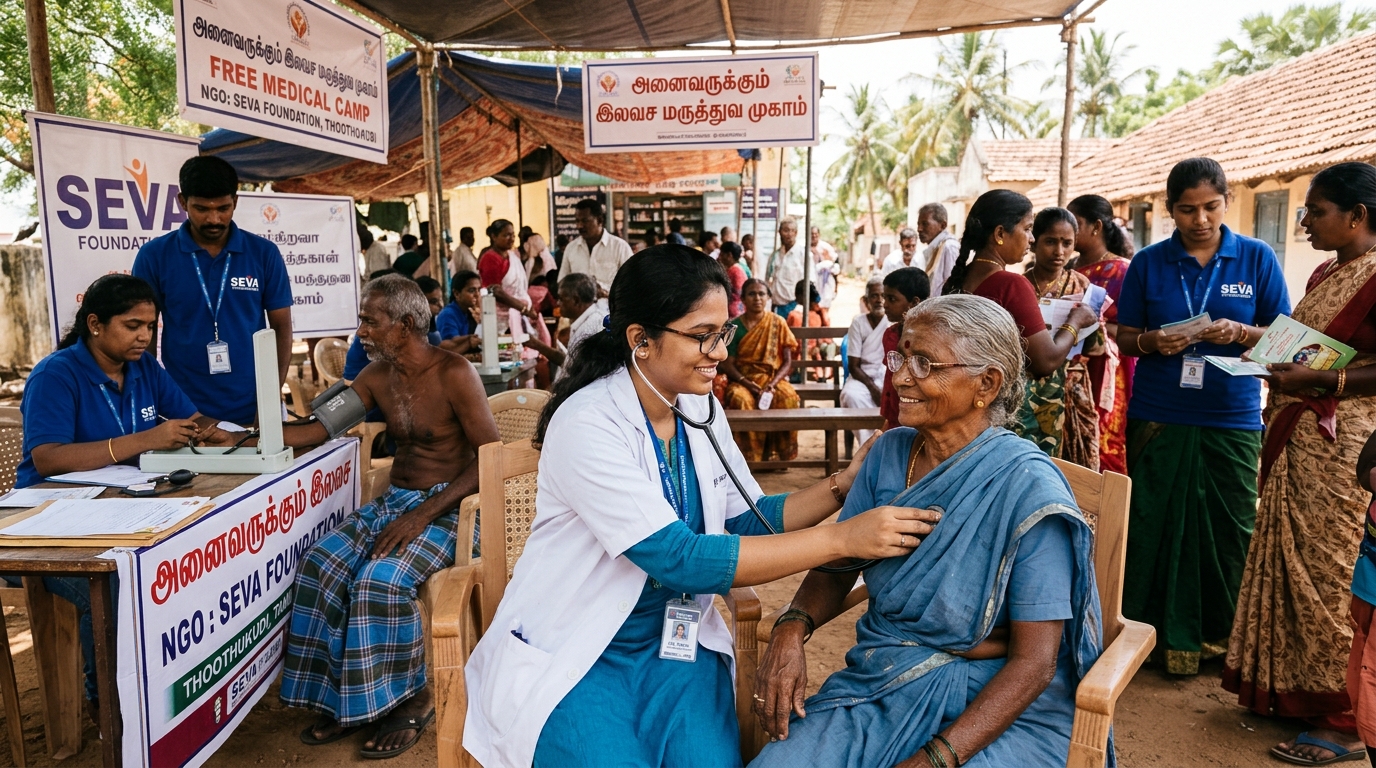
The primary barrier to healthcare in rural communities is accessibility. When diagnostic services are brought directly into the village community hall or school campus, participation surges. Key health services provided through NGO outreach include:
- Routine Health Screenings: Early detection of hypertension, diabetes, and cardiovascular warning signs through regular blood pressure and blood glucose screenings.
- Eye and Vision Care Camps: Free eye examinations, screening for cataracts, and distribution of corrective spectacles for elderly villagers, weavers, and school children.
- Basic Pediatric & Geriatric Care: Providing specialized consultations for vulnerable age groups who cannot easily travel long distances for medical reviews.
2. Fostering Preventive Health and Public Sanitation Awareness
Healthcare is not solely about administering medication; it begins with prevention. NGOs conduct interactive awareness sessions focusing on clean drinking water practices, safe sanitation, and vector-borne disease prevention. In coastal villages prone to seasonal waterborne illnesses, educating communities on water purification and proper waste management serves as the first line of defense.
3. Empowering Women as Village Health Champions
Women form the backbone of family health in rural households. By working closely with Women Self-Help Groups (SHGs) and adolescent girls, NGOs conduct targeted workshops on maternal nutrition, anemia prevention, menstrual hygiene, and adolescent healthcare. When a mother is equipped with accurate nutritional knowledge, the health trajectory of the entire household improves exponentially.
Support Community Health Camps
Your contribution helps provide free medical checkups, essential medicines, and diagnostic tests to underserved rural families.
Support Healthcare Drives4. Collaborative Health Partnerships
Sustainable healthcare delivery relies on strong partnerships. By collaborating with dedicated local physicians, medical colleges, diagnostic centers, and district health authorities, NGOs ensure that patients diagnosed with complex conditions receive structured referrals, financial guidance, and ongoing treatment follow-ups.
Conclusion
The role of an NGO in Thoothukudi extends beyond temporary medical relief; it is about establishing a continuous continuum of care and trust. Through grassroots health camps, targeted education, and compassionate outreach, Sundaram Ammal Foundation remains dedicated to ensuring that every individual in our rural communities has the opportunity to live a healthy, dignified, and productive life.
Leave a Reply
Your email address will not be published. Required fields are marked