
 Are
you ready to help them? Let’s become a volunteers...
How to Find the Right NGO in Thoothukudi for Your Child's Educational Support
"Every child holds immense potential; finding the right educational mentor turns natural curiosity into academic excellence and self-reliance."
Introduction: The Search for Meaningful Educational Support
In an increasingly competitive academic landscape, classroom instruction alone may not always address the unique learning pace of every student. For parents in Thoothukudi—especially those from rural or semi-urban backgrounds—finding an external support system that nurtures both academic fundamentals and personal confidence is a top priority. Non-Governmental Organizations (NGOs) have stepped forward to fill this critical need, offering community learning spaces, remedial tutoring, and digital literacy. However, choosing the right organization requires evaluating credibility, pedagogical quality, and community values.
1. Evaluate the NGO's Track Record and Transparency
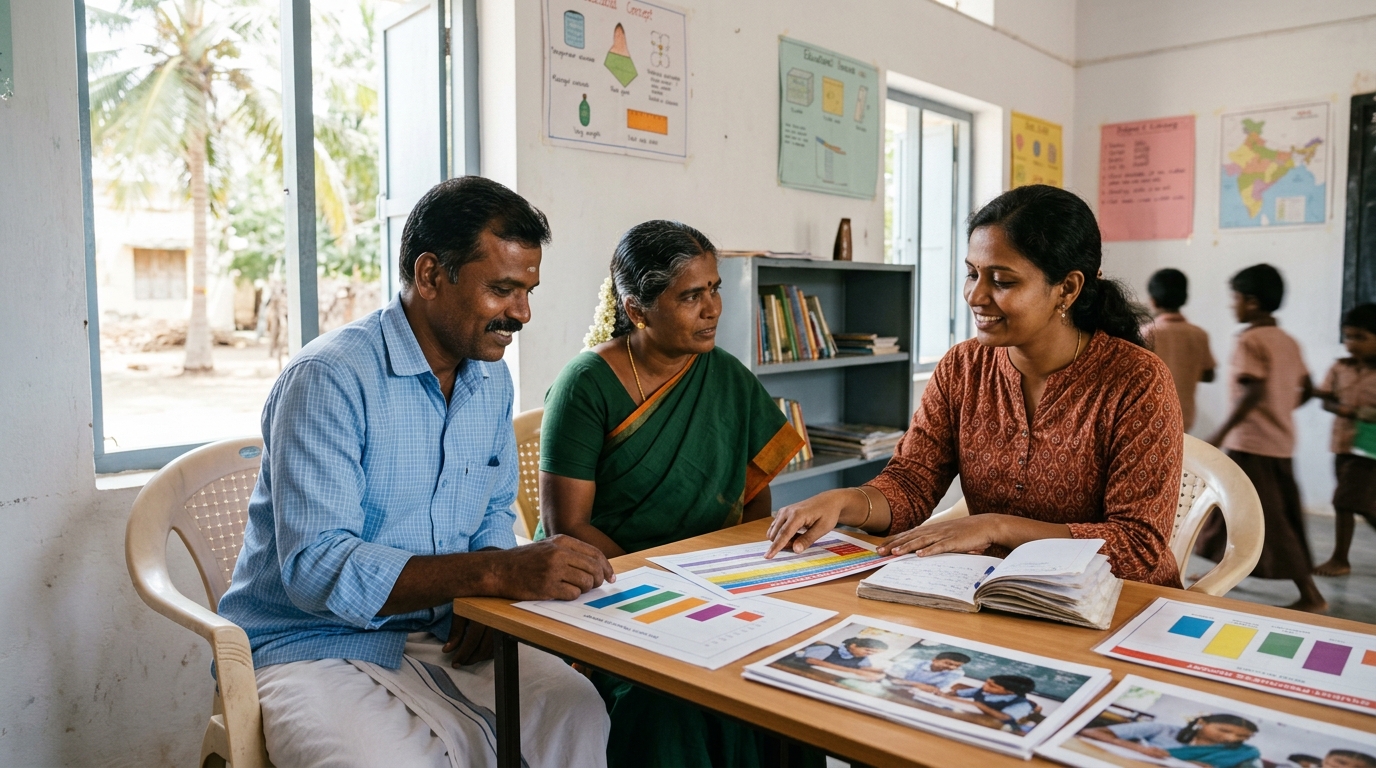
A trustworthy NGO maintains open communication with families and demonstrates verifiable results. Look for organizations that conduct regular parent-teacher interactions, provide clear progress updates, and have a proven record of helping students overcome academic hurdles. Transparency in operations and a welcoming approach to parents are key indicators of institutional integrity.
2. Assess Teacher-Student Ratios and Personalized Mentorship
Large classroom settings often cause shy or struggling students to hesitate before asking questions. The most effective educational NGOs prioritize small batch sizes and personalized attention. Tutors should be patient, bilingual, and empathetic to first-generation learners, ensuring that children build solid foundational understanding in core subjects like mathematics, science, and languages.
3. Holistic Development Beyond Textbooks
Quality education extends beyond memorizing textbook formulas. The right NGO provides a holistic environment that includes foundational computer education, spoken English workshops, extracurricular creative arts, and life-skills training. At Sundaram Ammal Foundation, our community learning programs blend academic support with moral values, digital literacy, and personal self-confidence.
4. Safe, Accessible, and Community-Rooted Centers
Safety and geographic accessibility are vital considerations for parents. An ideal learning center should be situated within a safe walking distance from village neighborhoods or primary schools, offering a clean, well-lit, and motivating environment where boys and girls can study without distraction.
Conclusion: Investing in Your Child's Future
Partnering with the right NGO can transform your child's educational trajectory from struggle into success. By prioritizing compassionate mentorship, transparent practices, and holistic skill-building, Sundaram Ammal Foundation continues to serve as a beacon of academic empowerment for families across Thoothukudi.
Support Rural Education in Thoothukudi
Your contribution empowers underprivileged students with learning kits, remedial tutoring, and digital education.
Support Our Mission
Leave a Reply
Your email address will not be published. Required fields are marked