

 Are
you ready to help them? Let’s become a volunteers...
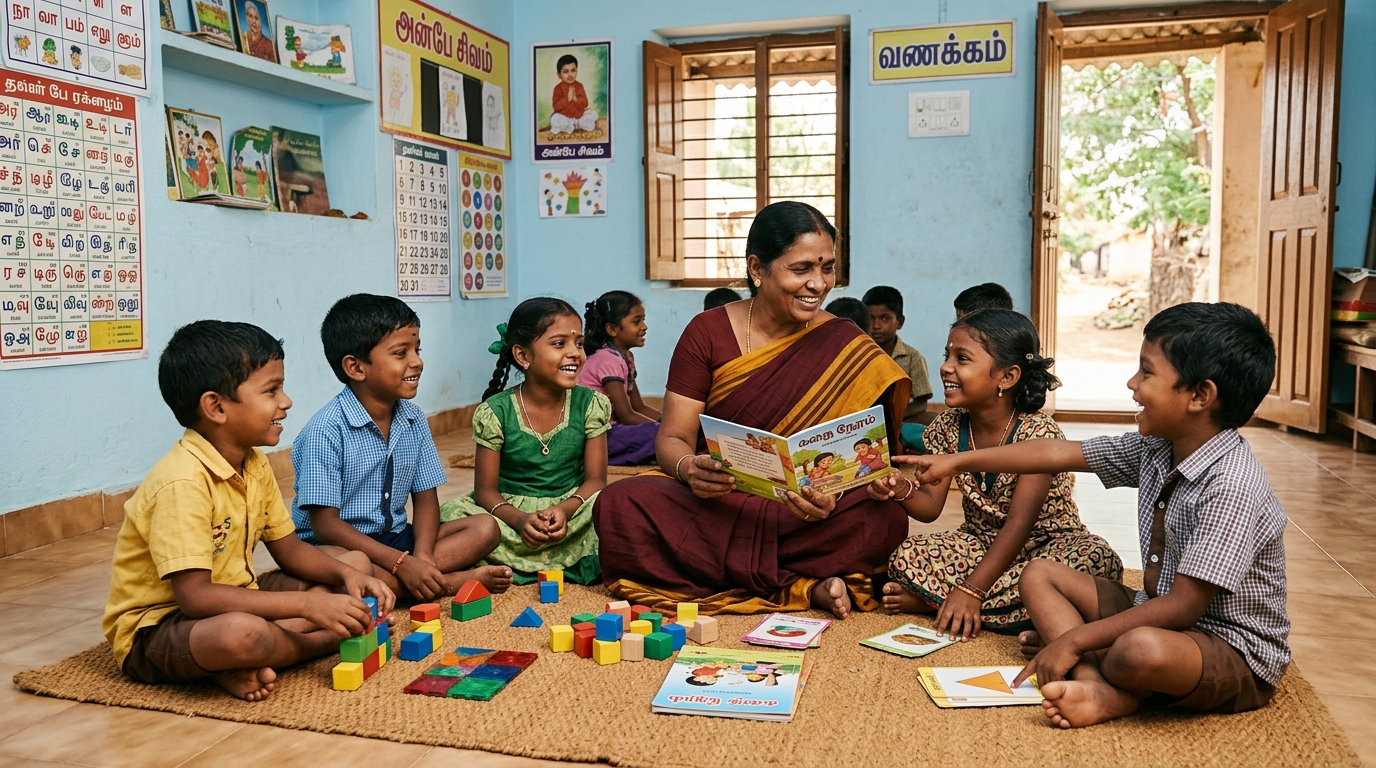
Why Early Childhood Education and Primary Learning Support Matter for Every Child
"The foundation of a skyscraper determines the height to which it can rise. In the same way, the early years of learning shape the entire future of a child."
Introduction: The Critical Window of Early Development
Neuroscience confirms that over 85% of a person’s cumulative brain development occurs before the age of six. During these formative early years, a child’s mind forms neural connections at an astonishing pace, establishing the biological groundwork for cognitive thinking, language acquisition, emotional regulation, and social interaction.
Yet, in many rural communities across Tamil Nadu—including interior villages and coastal settlements around Thoothukudi—early childhood education (ECE) is frequently overlooked or under-resourced. Many first-generation learners transition directly from home to formal primary schools without adequate foundational preparation, making early school life intimidating rather than inspiring. Recognizing and investing in quality early learning is essential to ensure that every child gets an equitable start in life.
1. Building Strong Foundational Literacy and Numeracy (FLN)
Children who struggle to read or grasp basic numeracy concepts in primary classes (grades 1 to 3) face an uphill battle in higher grades. Educational studies demonstrate that children who do not achieve foundational literacy by grade 3 are significantly more likely to fall behind academically and eventually drop out.
- Phonetic & Vocabulary Readiness: Early exposure to interactive storytelling, rhyming songs, and illustrated picture books expands a child's spoken vocabulary and listening comprehension.
- Intuitive Numeracy: Using tangible counters, building blocks, and counting games transforms abstract mathematical numbers into real, understandable concepts.
- Joyful, Pressure-Free Learning: Play-based pedagogical approaches remove the anxiety of rote memorization, encouraging children to associate learning with joy and curiosity.
2. Nurturing Social, Emotional, and Cognitive Confidence
Academic skills are only one part of early development. Early childhood learning spaces provide an invaluable social environment where young children learn how to collaborate, share toys, express feelings verbally, and resolve conflicts peacefully with peers.
For children growing up in vulnerable socioeconomic backgrounds, caring educators provide psychological safety and emotional encouragement. This early sense of security builds profound self-confidence that stays with children as they progress into higher academic levels.
3. Supporting First-Generation Learners and Rural Parents
In many rural households, hardworking parents—such as daily wage laborers, farmers, and artisanal workers—have had limited formal schooling themselves. While they deeply desire a bright educational future for their children, they often lack the academic background or time to assist with early homework, phonetics, or primary school concepts.
Community primary learning centers and after-school support programs bridge this gap. By providing structured evening guidance, patient tutors, and interactive learning tools right within the village neighborhood, NGOs ensure that first-generation learners never feel left behind.
Support Early Child Learning Programs
Help us provide learning kits, educational toys, and primary school support to underprivileged rural children in Thoothukudi.
Support Child Education4. How Sundaram Ammal Foundation Empowers Young Learners
At Sundaram Ammal Foundation, we believe that no child’s potential should be limited by their geography or economic circumstances. Our primary learning initiatives in rural Thoothukudi focus on:
- Community Early Learning Hubs: Safe, child-friendly spaces equipped with age-appropriate storybooks, cognitive puzzles, and creative drawing materials.
- Dedicated Mentors & Remedial Tutoring: Caring local youth tutors who conduct remedial primary sessions in small batches, ensuring individual attention for every child.
- Parental Awareness Workshops: Guiding rural parents on positive reinforcement, healthy daily routines, balanced nutrition, and the vital role of consistent school attendance.
Conclusion
Quality early childhood education and primary learning support are not luxuries—they are the most powerful equalizers of human opportunity. By nurturing a child's curiosity, emotional well-being, and foundational literacy from the earliest years, we build resilient thinkers, lifelong learners, and confident future leaders. Sundaram Ammal Foundation remains dedicated to standing by every child in Thoothukudi, ensuring their educational journey begins on solid, supportive ground.
Leave a Reply
Your email address will not be published. Required fields are marked