

 Are
you ready to help them? Let’s become a volunteers...
Are
you ready to help them? Let’s become a volunteers...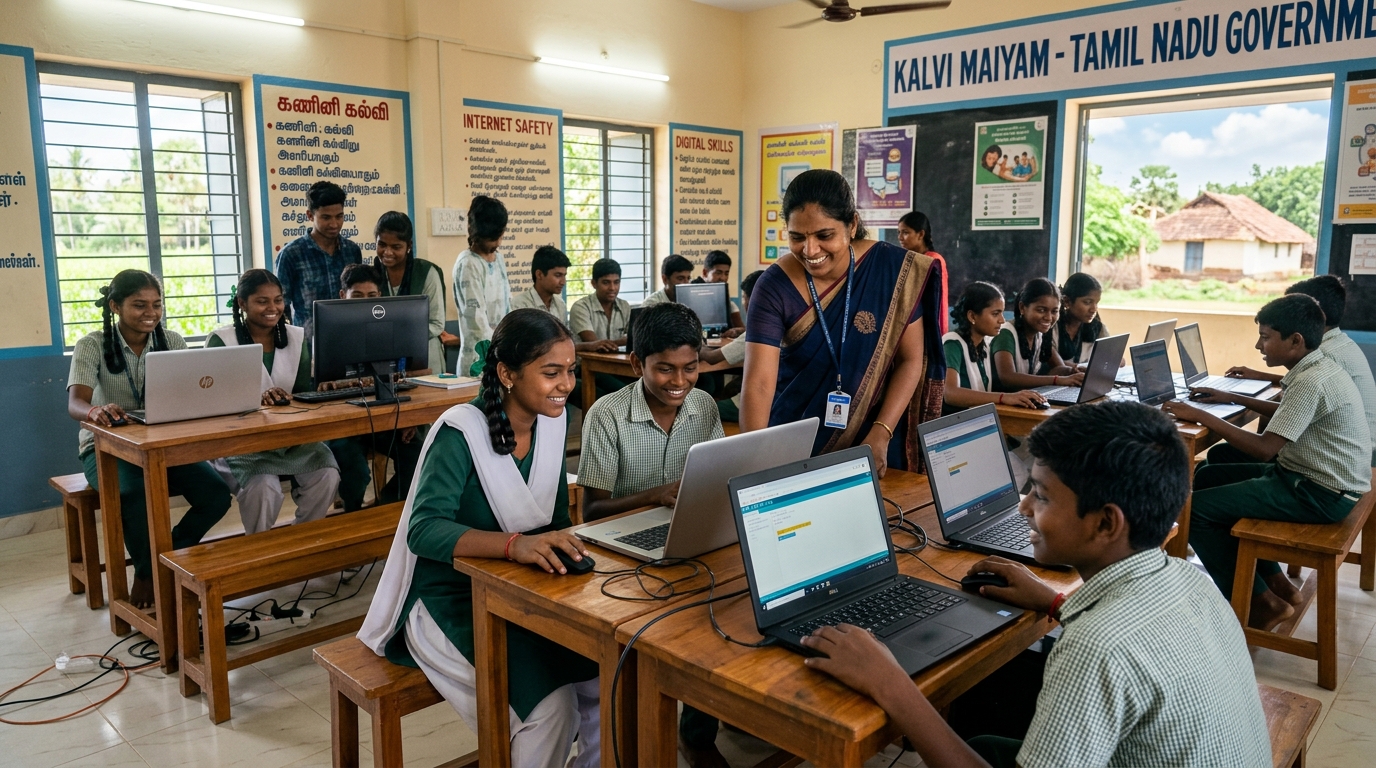
NGO Help for Education: Improving Digital Literacy Through Community Learning Programs
"Access to digital tools and literacy is not just a technological privilege; it is a fundamental bridge to educational equality and social empowerment."
Introduction: The Need for Digital Inclusion
In our increasingly interconnected world, basic digital literacy has become as fundamental as reading and writing. From applying for college admissions and accessing government welfare services to researching school projects and discovering career paths, technology shapes every aspect of daily life. However, in many rural pockets of Tamil Nadu, students attending under-resourced schools return home to environments where desktop computers or reliable internet connectivity simply do not exist.
This persistent divide creates an invisible barrier, often leaving promising young learners behind their urban peers. Non-governmental organizations (NGOs) are uniquely positioned to bridge this gap. Through community-based learning centers, NGOs like Sundaram Ammal Foundation in Thoothukudi are transforming village education by bringing practical digital literacy directly to the grassroots.
Beyond the Traditional Classroom: The Power of Community Learning Centers
While formal school curricula often struggle to provide sufficient one-on-one computer practice due to infrastructure constraints, community learning centers serve as vibrant evening hubs for practical education. These centers operate right within village neighborhoods, providing safe, supportive, and accessible spaces where students can learn at their own pace.
Instead of passive textbook study, students at community centers engage in hands-on exploration. Having dedicated mentors who speak their local language and understand their personal backgrounds eliminates the intimidation often associated with new technology.
Core Pillars of an Impactful Digital Literacy Curriculum
Effective community learning programs go far beyond teaching simple typing. They are designed to cultivate critical thinking, curiosity, and practical utility:
- Everyday System Navigation: Mastering basic hardware, keyboard shortcuts, folder organization, and file handling gives beginners the foundational confidence they need.
- Interactive E-Learning & Academic Exploration: Students learn to leverage curated online educational resources, digital libraries, and video tutorials to clarify complex math and science concepts taught in school.
- Cyber Safety & Responsible Online Citizenship: With internet access comes the responsibility of navigating it safely. Students are guided on safeguarding personal data, identifying phishing and scams, and maintaining respectful digital communication.
- Career & Higher Education Awareness: For high school seniors, community learning hubs provide vital assistance with online college application portals, scholarship research, and resume formatting.
Peer Learning and Mentorship at the Grassroots
One of the greatest strengths of community-based learning is the collaborative environment it fosters. Older students who gain proficiency naturally become peer mentors for younger children. This peer-to-peer dynamic creates a virtuous cycle of motivation: when a first-generation learner sees their neighbor confidently operating a computer and solving problems, belief in their own capabilities skyrockets.
Local volunteers and educated youth from the surrounding communities also step forward as instructors, reinforcing a strong sense of collective progress and civic pride.
Support Community Digital Learning
Help us equip more village learning centers with computers, tablets, and interactive educational tools.
Support Our MissionThe Ripple Effect: Uplifting Rural Families
The impact of community digital learning centers extends far beyond the student desk. As children become digitally literate, they naturally become technological guides for their families. Parents—including smallholder farmers, weavers, and self-help group members—often turn to their children for assistance with digital banking, online ticket booking, and tracking agricultural subsidies.
In this way, investing in youth digital education becomes a catalyst for family-wide financial literacy and broader village modernization.
Conclusion: Building a Digitally Empowered Future
Improving digital literacy through community learning programs is one of the most effective, scalable interventions for educational equity. By providing rural children with regular access to computers and patient, hands-on mentorship, NGOs turn potential into tangible opportunity. At Sundaram Ammal Foundation, we believe that when a rural student learns to navigate the digital world, they unlock the power to rewrite not only their own future, but the future of their entire community.
Leave a Reply
Your email address will not be published. Required fields are marked